Titanium additive manufacturing | Global engineering RFQ

Titanium 3D printing for engineering-ready parts

Evaluate TC4 / Ti-6Al-4V, Grade 23 ELI, and commercially pure titanium from CAD and DfAM through LPBF or EBM, thermal processing, machining, inspection, documentation, and delivered-part quotation.

Prefer email?

Ti-6Al-4V, Grade 23, and CP titanium Prototype and production review Finished-part scope
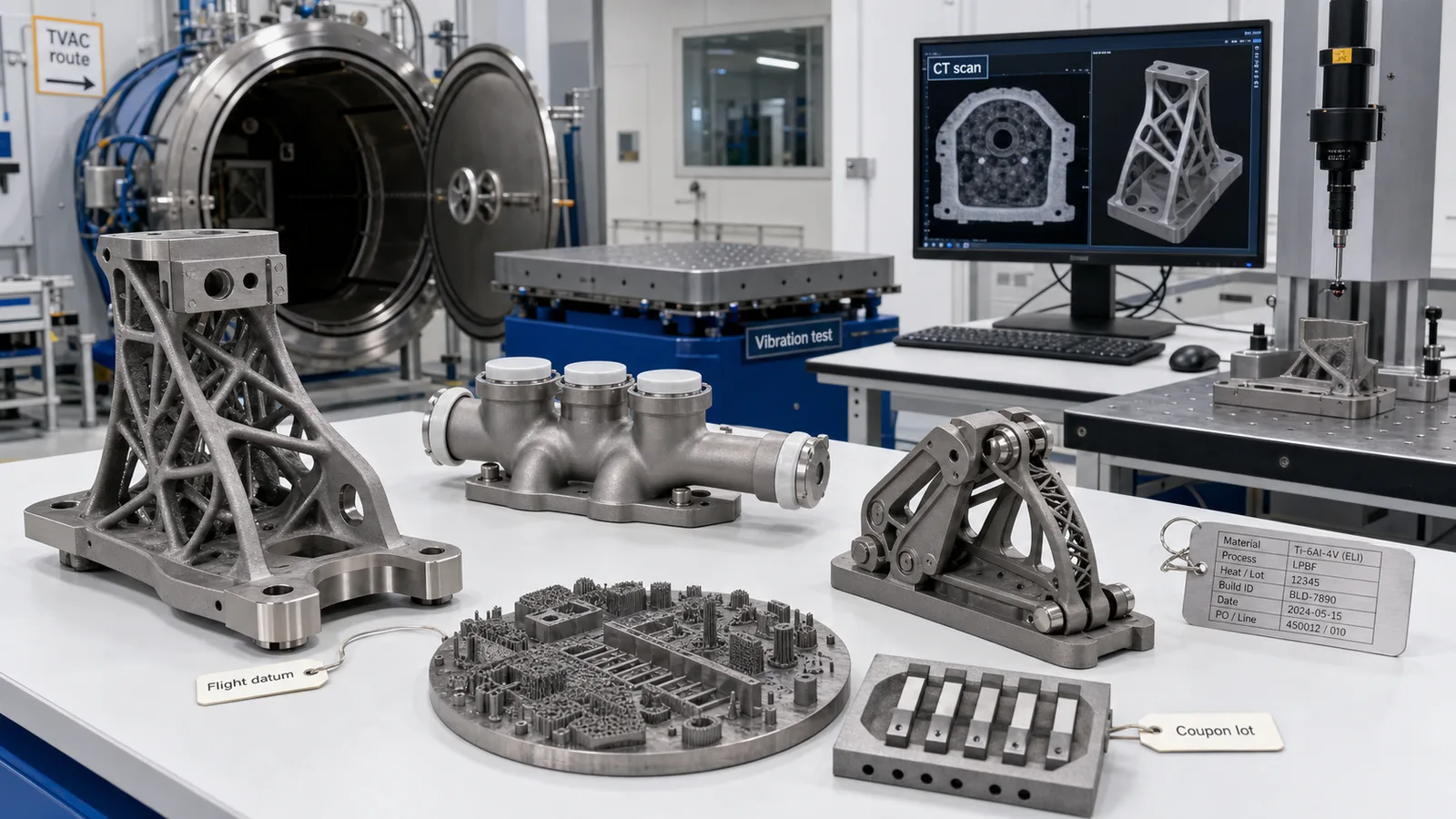
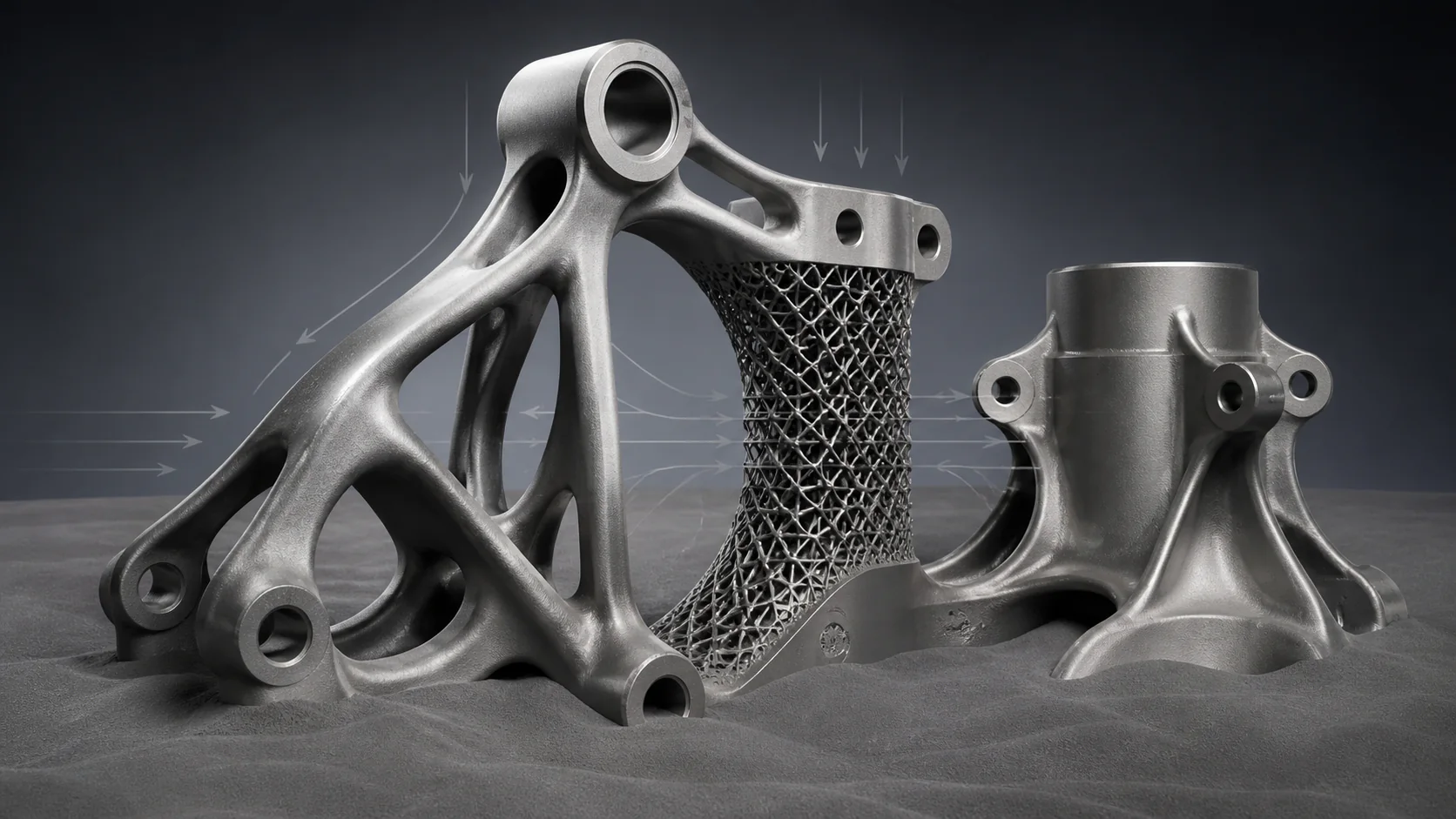
Illustrative titanium additive manufacturing parts and lattice structures

Representative titanium AM geometry. Final manufacturability, supplier route, build envelope, certification, and acceptance are confirmed against the controlled RFQ.

Engineering guides
42
Decision paths
6
Core PBF routes
LPBF / EBM

Engineering and DfAM

Review geometry, orientation, supports, thin walls, trapped powder, distortion, machining access, and protected surfaces.

LPBF or EBM route review

Match the part, alloy, feature scale, surface state, quantity, and qualification burden to a supplier-specific route.

Post-processing

Define stress relief, HIP when justified, support removal, CNC features, finishing, cleaning, and handling.

Inspection and delivery

Agree CMM, CT, NDT, coupons, surface, leak, pressure, traceability, documentation, and delivered condition.

01 | Project fit

AM must change part performance or system economics

Titanium is expensive to print and qualify. The route earns its cost when geometry creates system-level value and the finished-part evidence can be defined before quotation.

Review the manufacturing scope

Strong fit

Geometry carries the value

  • Topology-led load paths with meaningful mass reduction.
  • Internal channels, compact manifolds, lattices, or porous structures.
  • Part consolidation that removes joints, alignment, or failure interfaces.
  • Volumes where tooling or conventional access is the constraint.
Weak fit

AM adds cost without removing risk

  • Simple plates, blocks, shafts, or other easily machined geometry.
  • Blanket tight tolerances without stock, datums, or inspection access.
  • Enclosed powder or supports that cannot be removed and verified.
  • High consequence of failure without a qualification budget.

03 | DfAM and acceptance workflow

Lock manufacturability and evidence before the quote becomes a promise

A usable quotation connects the geometry to the alloy, supplier process, delivered state, inspection plan, records, and commercial scope. Skipping a gate moves risk downstream.

  1. 01

    Screen the business case

    Confirm that mass, consolidation, internal flow, patient fit, or another geometry-led benefit can justify AM cost and risk.

  2. 02

    Resolve DfAM risks

    Plan orientation, supports, distortion, powder removal, machining stock, datums, protected surfaces, and inspection access.

  3. 03

    Lock the delivered state

    Connect alloy and process to thermal treatment, HIP if justified, machining, finishing, cleaning, and handling.

  4. 04

    Build the evidence plan

    Match CMM, CT, NDT, coupons, surface, leak, pressure, and traceability evidence to the actual failure modes.

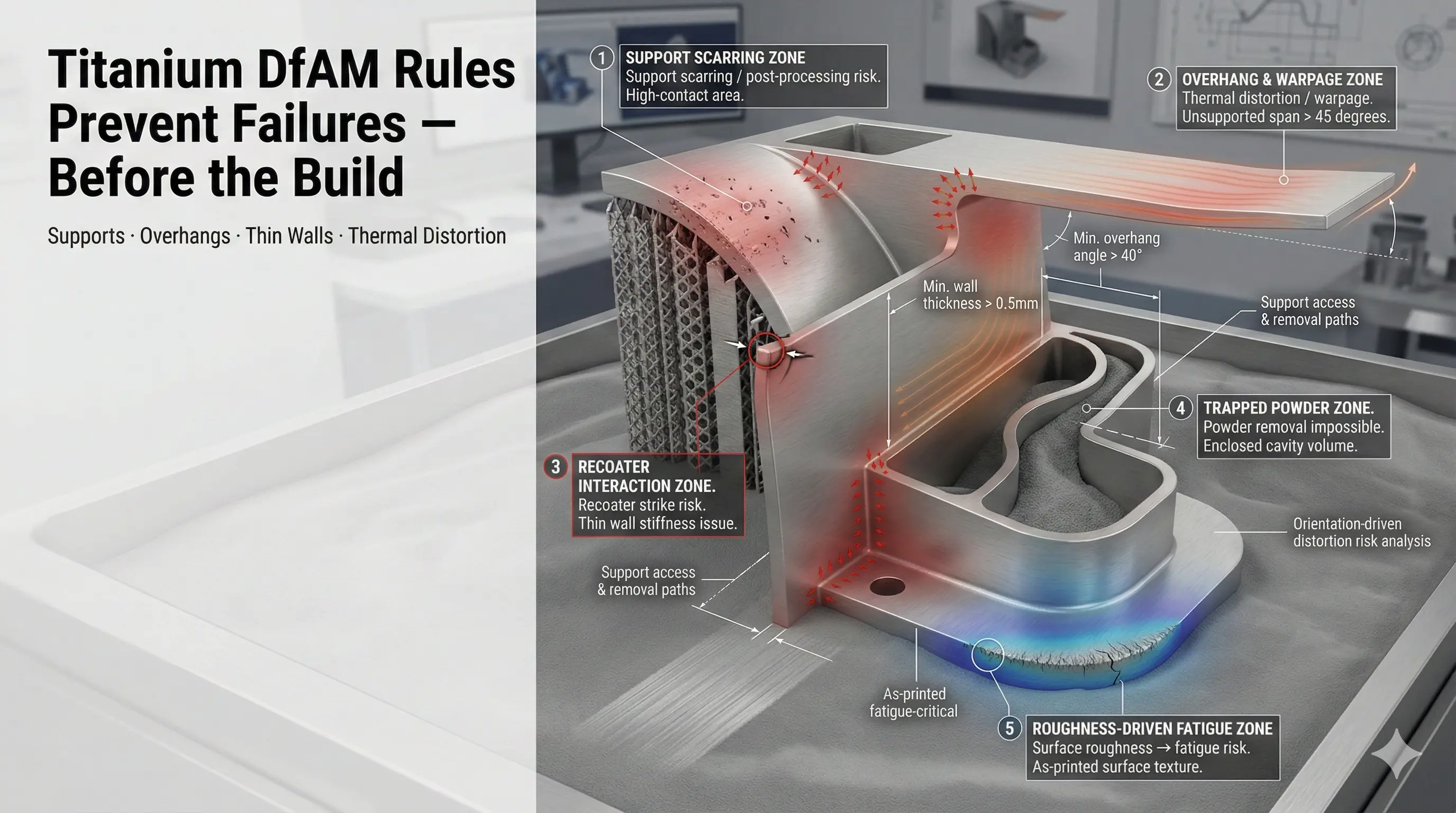
Illustrated titanium DfAM review covering supports, warpage, walls, and powder removal

Design review

Expose support and powder-removal risk

A printable outside shape is not enough. Review overhangs, enclosed volumes, access paths, distortion, machining stock, and protected interfaces before quotation.

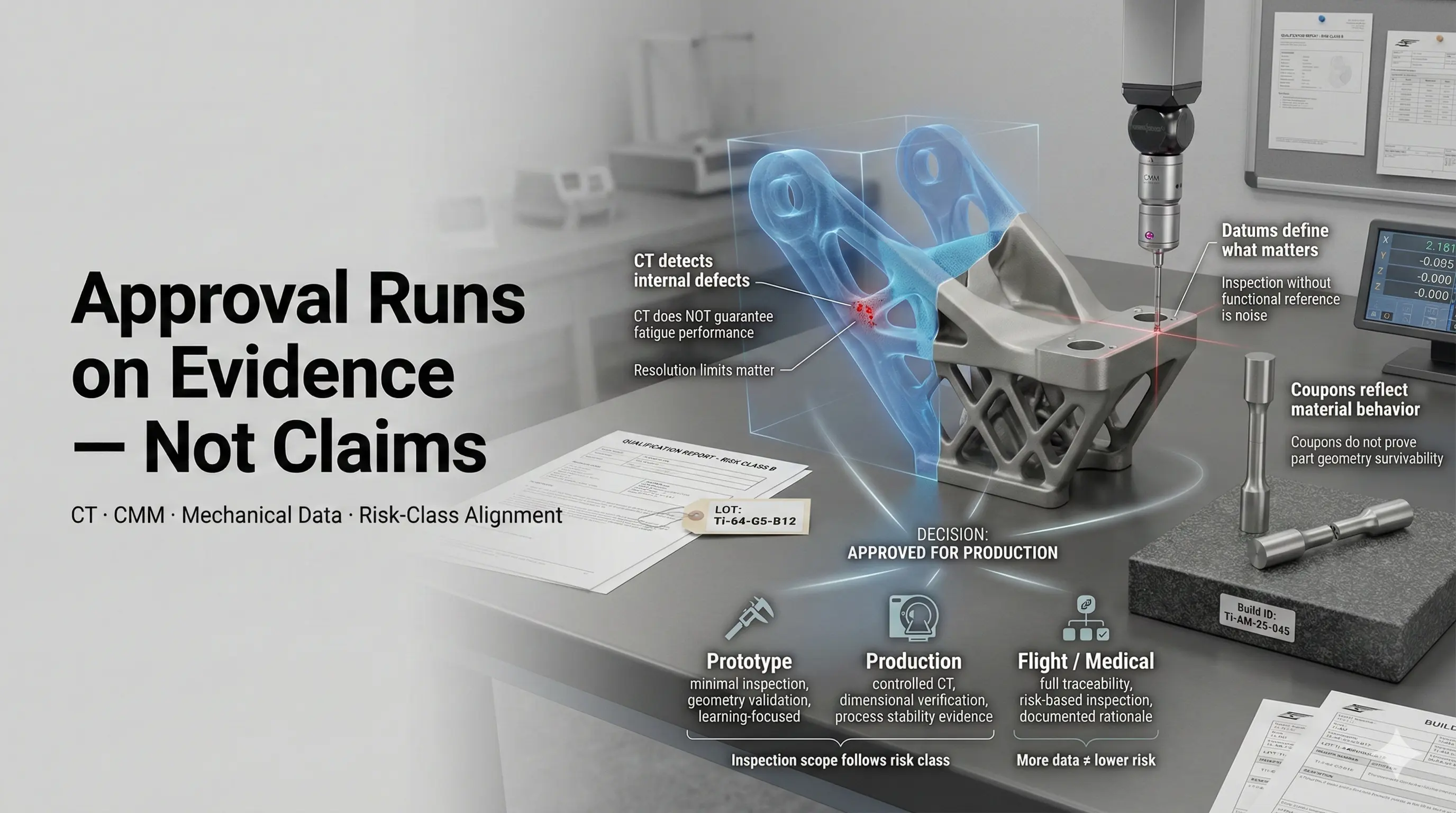
Illustrated titanium AM inspection plan with CT, CMM, and evidence checkpoints

Acceptance planning

Tie inspection to the drawing

Specify what CMM, CT, coupons, surface checks, leak or pressure tests, and records must prove instead of requesting a generic inspection package.

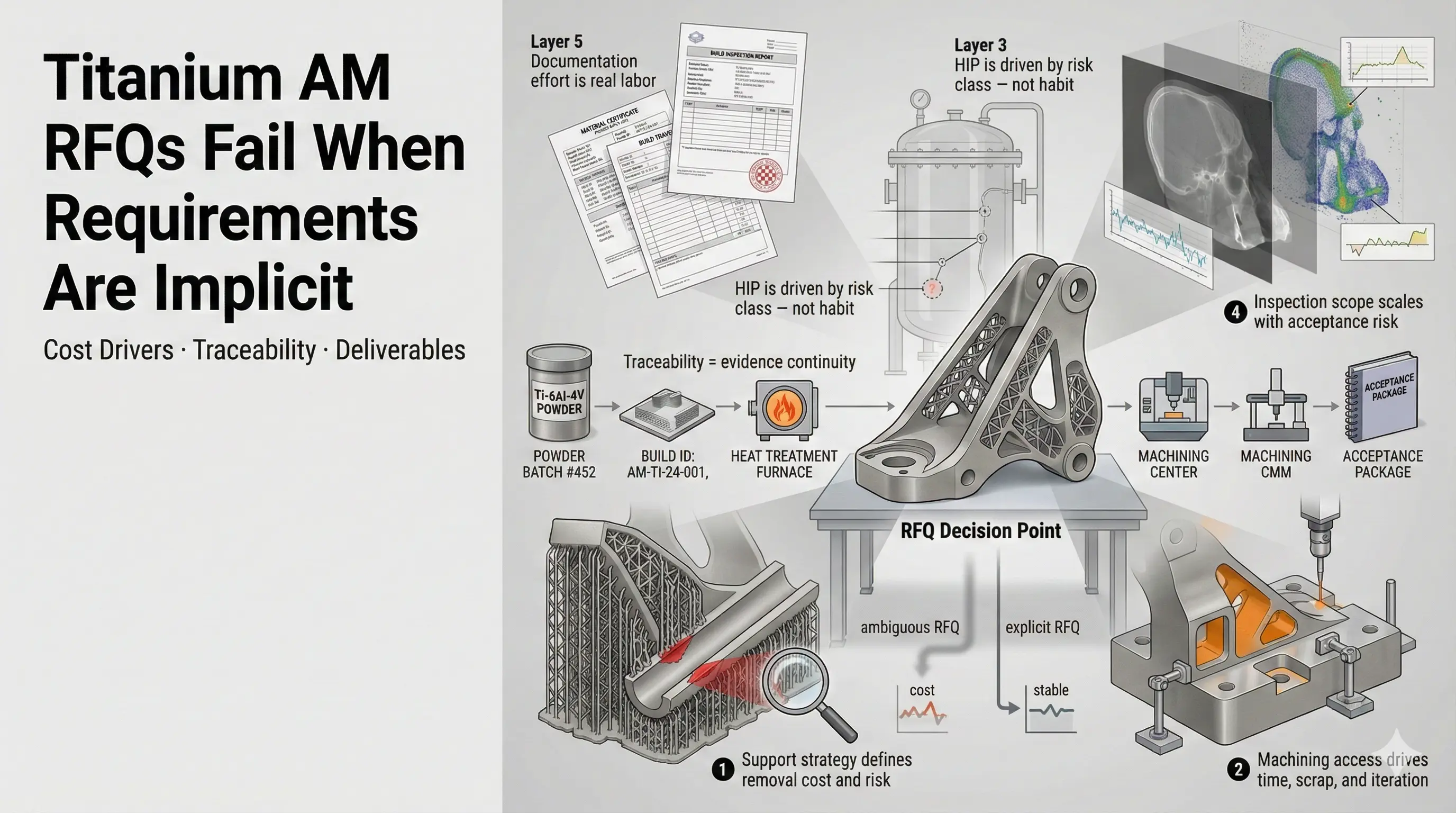
Illustrated titanium AM RFQ inputs for cost, traceability, and delivered-part scope

Commercial scope

Make supplier quotations comparable

Issue the same part definition, quantity, delivery state, evidence package, schedule, and commercial assumptions to every supplier route under review.

One controlled starting package

Bring CAD and what the finished part must prove

Unknown items can remain open, but geometry, material intent, acceptance boundary, and commercial assumptions must converge before a production-intent route is fixed.

Useful RFQ inputs

  • STEP or native CAD plus a controlled 2D drawing
  • Alloy, governing specification, and delivered condition
  • Quantity, lot definition, target date, and ship-to country
  • Critical datums, surfaces, tolerances, and operating conditions
  • Post-processing, inspection, documentation, and acceptance needs

04 | Production route

Specify the delivered material state, not only the alloy nickname

Material identity, AM process, thermal condition, HIP, surface, machining, orientation, sampling, and acceptance evidence determine what the quoted part represents. Supplier equipment and build envelope are confirmed only after the actual RFQ is reviewed.

Process review

LPBF / EBM

Route selection depends on the part, alloy, evidence, and supplier qualification.

Delivered state

Print to finished part

Thermal processing, machining, surface, cleaning, and records stay in scope.

Acceptance

Drawing-led evidence

Inspection is planned against failure modes and purchase requirements.

05 | How we work

One route from requirements to delivered part

The process is locked around the agreed inputs, drawing, and acceptance criteria, so engineering review, printing, post-processing, inspection, documentation, and quotation describe the same deliverable.

  1. 01

    Define the requirement

    Send the available CAD, drawing, alloy intent, quantity, target timing, operating conditions, and acceptance needs.

  2. 02

    Review and lock the route

    Resolve DfAM, material, print process, post-processing, critical interfaces, inspection, and documentation assumptions.

  3. 03

    Build and finish

    The controlled route moves through printing, thermal processing, support removal, machining, finishing, and cleaning.

  4. 04

    Inspect and deliver

    Evidence is produced against the agreed scope before packaging, documentation closeout, and international delivery.

Engineering review

Start with the controlled part definition

Add quantity, target timing, operating conditions, critical interfaces, and the acceptance requirements that cannot be compromised.

Send CAD for review

06 | Parts and applications

Titanium geometry designed around the operating job

These illustrative routes show where titanium AM may create value. Real feasibility still depends on controlled geometry, loads, environment, interfaces, material state, inspection, and approval ownership.

Illustrative titanium additive manufacturing route for aerospace and space components

Flight and space hardware

Load-path efficiency, mass reduction, fatigue, interfaces, traceability, and design-authority approval.

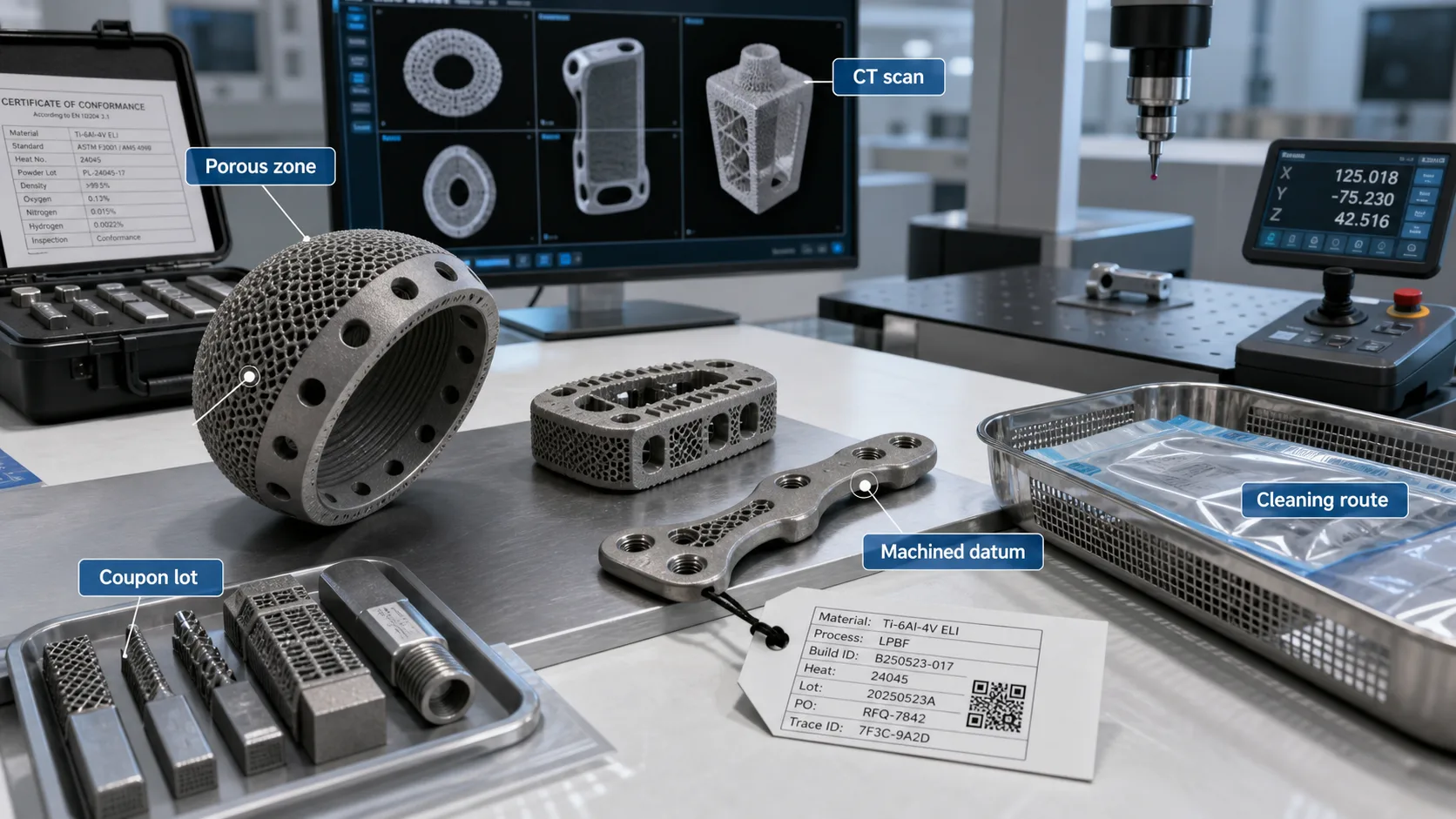
Illustrative titanium additive manufacturing route for medical and orthopedic structures

Medical and orthopedic structures

ELI material, porous geometry, cleaning, validation, regulatory, and release boundaries.

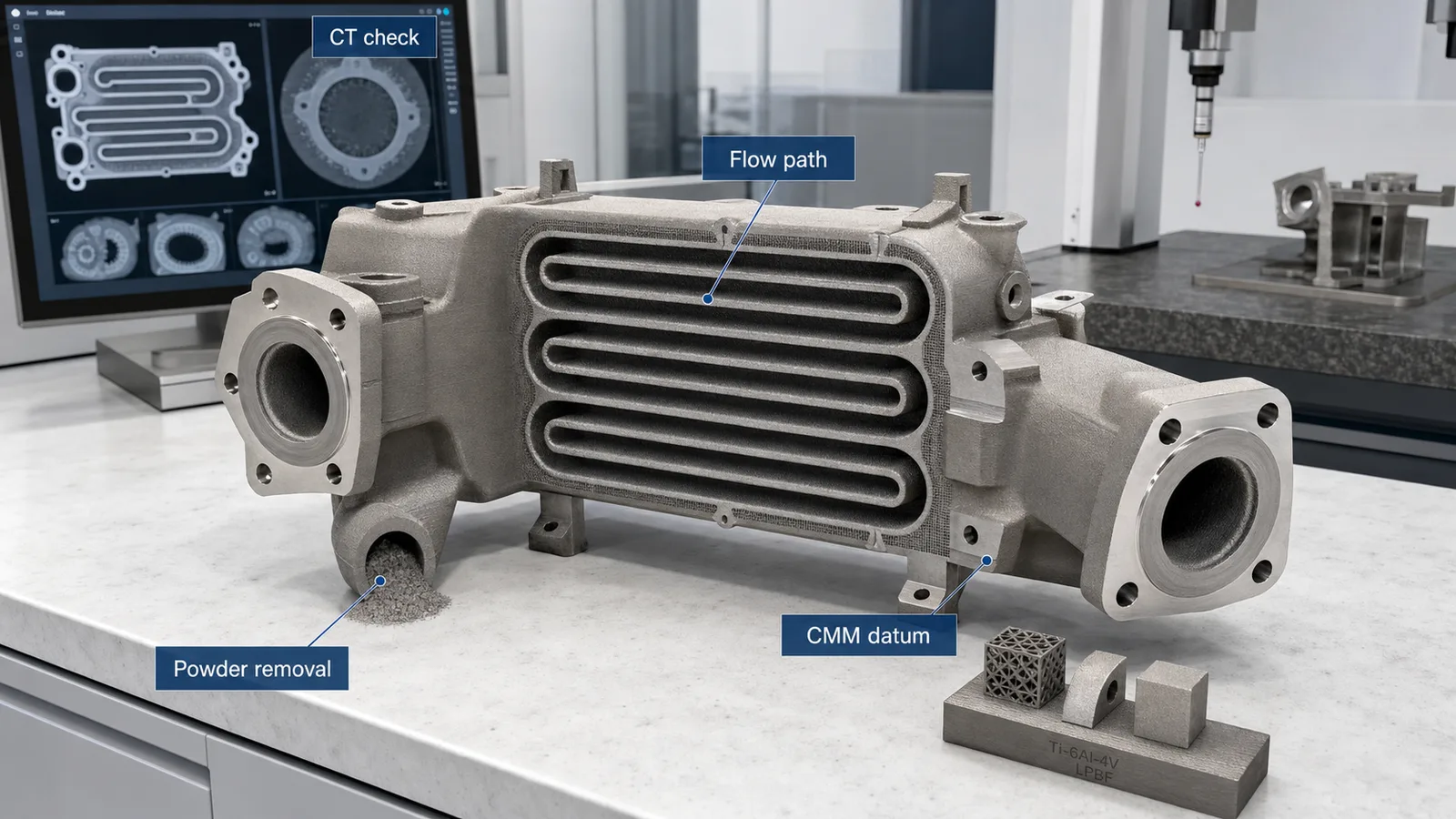
Illustrative titanium additively manufactured heat exchanger and internal flow geometry

Thermal and flow hardware

Internal passages, compact manifolds, powder removal, leak testing, finishing, and CT access.

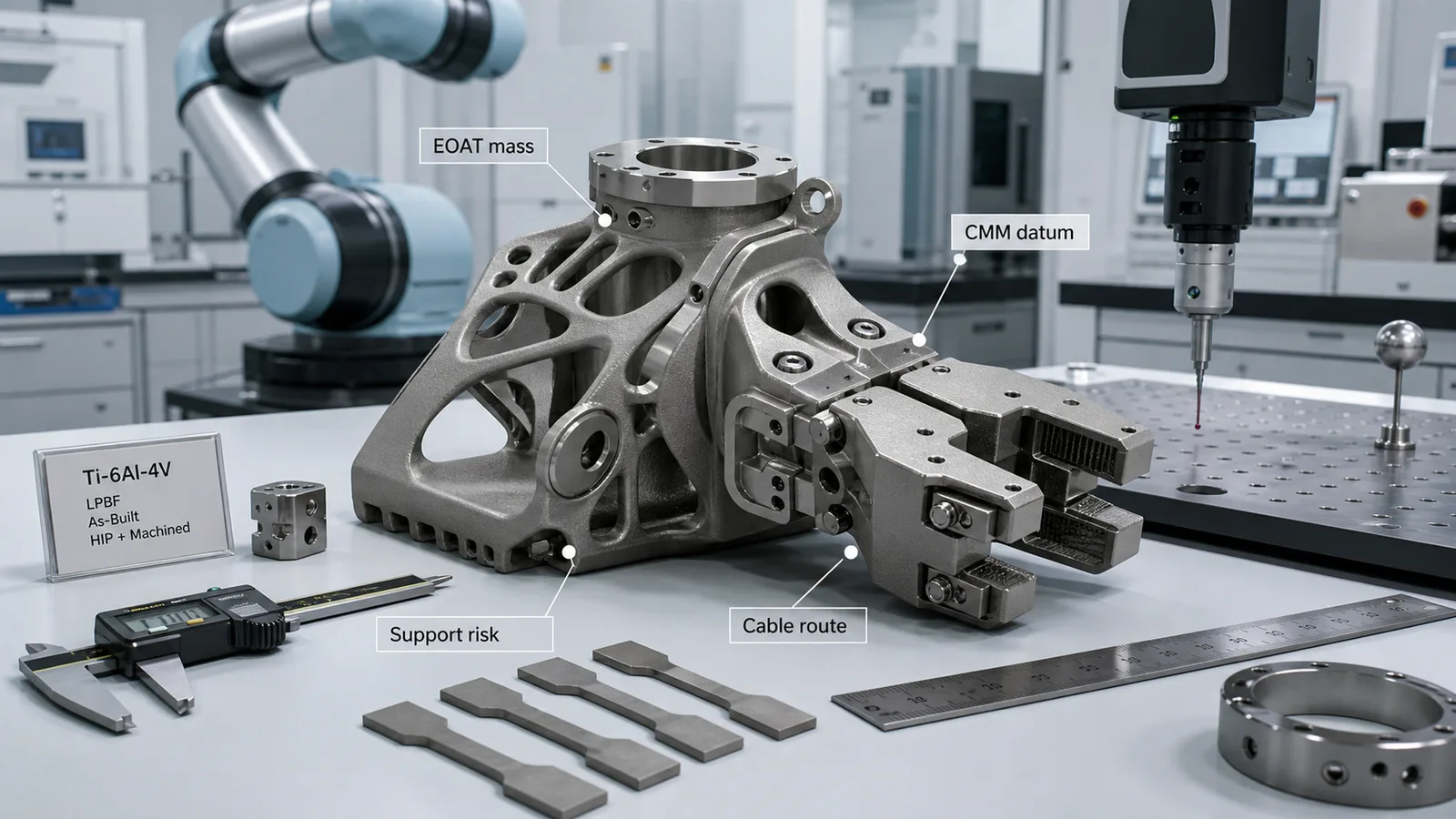
Illustrative titanium additive manufacturing route for robotics and automation parts

Robotics and precision equipment

Low moving mass, stiffness, compact integration, thermal duty, cleanliness, and machined interfaces.

Latest engineering decisions

View all engineering guides

New and updated guides address a distinct engineering or purchasing decision and end with the evidence needed for an actionable RFQ.

Frequently asked questions

Titanium AM quotation questions

These answers establish a screening boundary. The controlled CAD, drawing, specification, and acceptance plan remain authoritative for a real project.

Which titanium grades can be reviewed?

Most projects begin with Ti-6Al-4V / TC4 / Grade 5, Ti-6Al-4V ELI / Grade 23, or a controlled commercially pure titanium route such as Grade 1 or Grade 2. Other alloys depend on an available and qualified supplier process.

Is LPBF or EBM the better process?

The answer depends on geometry, feature scale, thermal behavior, support and powder-removal access, surface and machining requirements, material route, evidence burden, quantity, and supplier qualification. A process name alone is not enough.

Does a titanium material standard certify the finished part?

No. A material specification supports one layer of the requirement. The drawing, process route, post-processing, inspection technique, acceptance criteria, records, and any regulatory or design-authority approval remain project-specific.

What files produce the fastest useful quote?

Send STEP or native CAD, a controlled 2D drawing, quantity and lot definition, target material, delivery date, critical datums and surfaces, operating conditions, post-processing, inspection, documentation, and ship-to country.

When should titanium additive manufacturing be rejected?

Reject or re-route the project when geometry is simple, conventional machining or forging has a clear cost and risk advantage, supports or powder cannot be removed, critical surfaces cannot be finished, or the evidence budget cannot support the required consequence of failure.

08 | Start a project

Send CAD and acceptance requirements for engineering review

Submit what is already known. Alloy, quantity, critical datums and surfaces, operating conditions, post-processing, inspection, documentation, target timing, and ship-to country help us return a clear scope.

Secure titanium RFQ submission

Submit the files needed for an engineering review

Include enough detail to evaluate titanium material, process fit, post-processing, inspection, and quotation scope. Unknown items can be marked as not decided. A confirmation appears only after the secure submission service accepts the request.

  • Useful files: STEP/STP, X_T/X_B, IGES, STL, 3MF, PDF, or images.
  • Upload limit: up to 3 files, 5 MB each, 8 MB total.
  • Sensitive projects: do not send export-controlled, classified, medical-regulated, or otherwise restricted data before an approved handling agreement is in place.

Prefer email? Send the package to info@szcomo.com.

Email option

Optional titanium RFQ email template

Copy this into your own email if useful. Send the drawing and what you know; leave unknown fields blank rather than guessing.

Open email
Subject: Titanium AM RFQ - [alloy/process] - [quantity] - [target date]

Hello TITANIUM 3DP,

Please review the attached CAD/drawings for quotation.

Part/application:
Target alloy or standard:
Process preference, if any:
Attached files:
Quantity and build lot definition:
Target lead time:
Critical dimensions, datums, or functional surfaces:
Operating conditions:
Post-processing required:
Surface finish requirements:
Inspection scope:
Documentation package:
Ship-to country and Incoterms:

Notes:

Best regards,